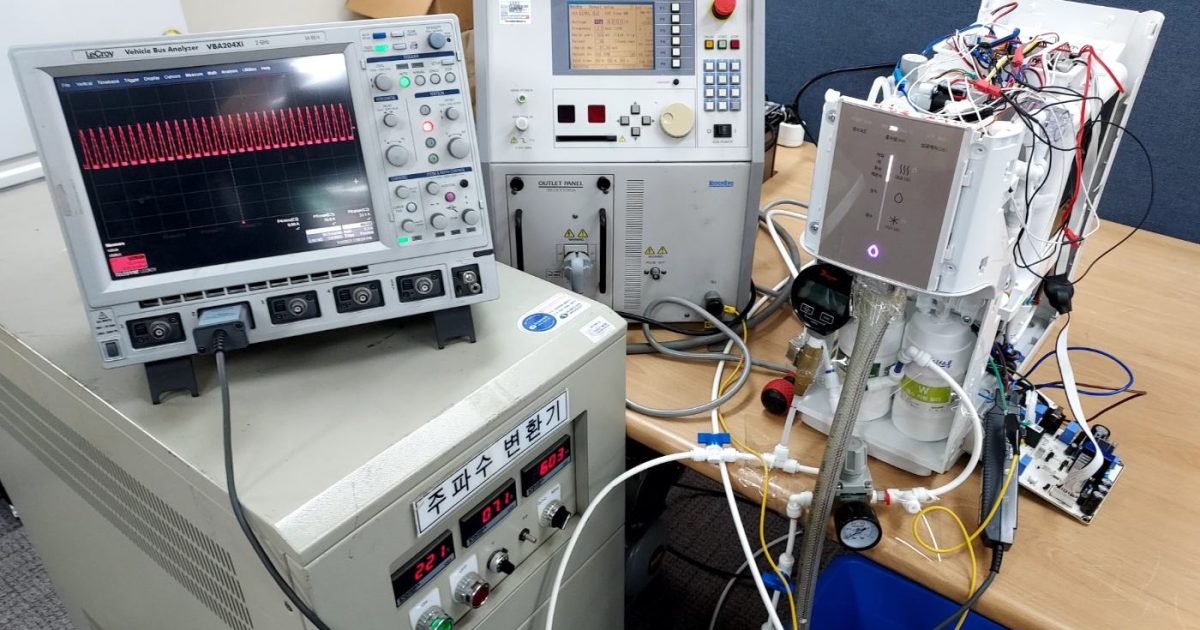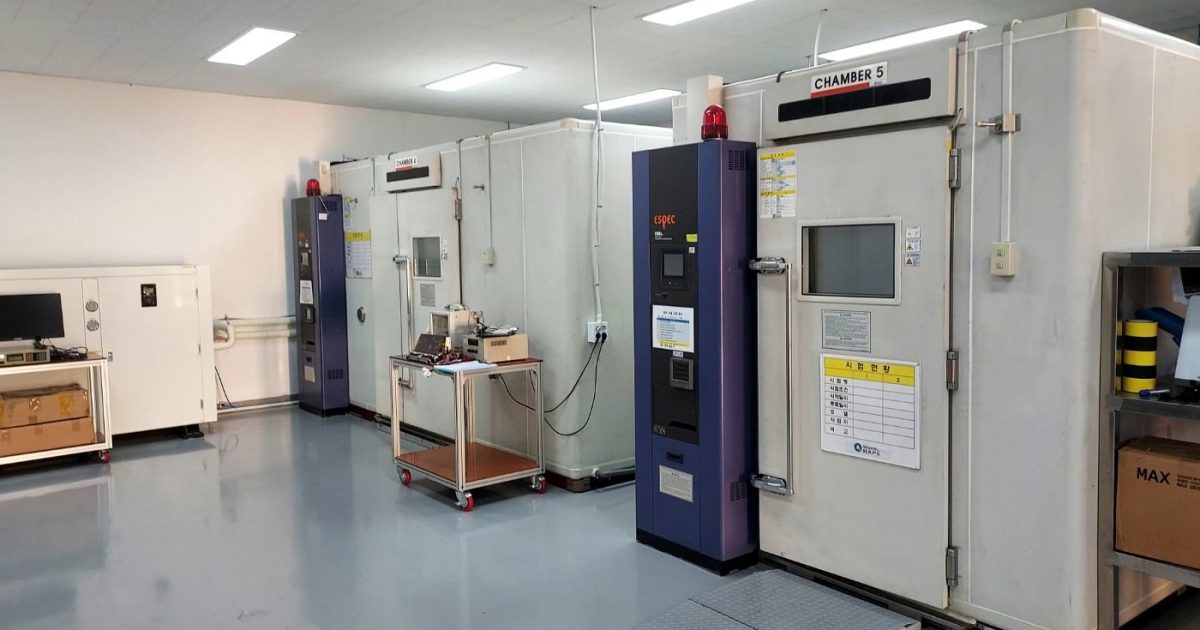
AEC-Q200 is the reliability qualification standard for passive components (capacitors, resistors, inductors and others) used in automotive electronics. Carmakers and tier-1 suppliers ask for test data to this standard before parts can be delivered. QRAPS tests to the current Rev. E: we run the stress tests the standard prescribes on our own equipment and provide the test data and reports you need for delivery.
Which components do we test?
The standard covers passive components for automotive electronics. The items we test include:
- Capacitors — MLCC, electrolytic capacitors, film capacitors
- Resistors, inductors and transformers
- Crystals/oscillators, varistors, fuses and connectors
Test items — environmental, mechanical and electrical
We perform the items AEC-Q200 requires, under the conditions it specifies. The items fall into three groups.
| Group | Test items |
|---|---|
| Environmental stress | Temperature cycling · Biased humidity · High temperature exposure · Thermal shock · Moisture resistance |
| Mechanical stress | Mechanical shock · Vibration · Board flex · Terminal strength |
| Electrical and endurance | Endurance / operational life · ESD · Resistance to soldering heat · Solderability |
Interpreting the standard for delivery
A customer's requirements do not always match the international standard. We interpret the differences between the two and work out which items to test under which conditions, starting from the test planning stage. For new components, alternative parts or components from a changed supplier, comparative evaluation tests show how they differ.
Equipment we use
| Equipment | Model |
|---|---|
| Large chambers | ESPEC EBL-4HW6P4C-22 · EBL-2HW6P3 |
| Temperature and humidity chambers | ESPEC ARS-1100 and 8 more units |
| Thermal shock chambers | VOTSCH VT 7012 S2 and 2 more units |
| HAST chambers (PCT) | ESPEC EHS-211M · TPC-412M |
| Combined vibration tester | THERMOTRON DS-640-911-24 |
| Salt spray tester | Advantest SST-900 |
| Tensile tester (terminal strength) | Daekyung DUT-200BM |
| Curve tracer | Advantest 370B |
What to prepare before your consultation
Cost and lead time depend on the product, the test items, the number of samples and the test conditions. If you tell us the following, we will provide a test plan, a quotation and an expected schedule during consultation.
- Component type and product details
- The test items and conditions you need — including any customer requirements
- Number of samples
- Whether a comparative evaluation is needed (new, alternative or changed-supplier components)
See the AEC-Q200 Testing page for details, and reach us through Contact Us or on +82-32-326-0213.
Frequently asked questions
Q. Which revision of AEC-Q200 do you test to?
We test to the current Rev. E.
Q. What if my customer's requirements differ from AEC-Q200?
We interpret the differences between your customer's requirements and the international standard and work out with you which items to test under which conditions, starting from the test planning stage.
Q. Can you test alternative parts or components from a new supplier?
Yes. We support comparative evaluation tests of new components, alternative parts and components from a changed supplier.
Q. What kind of report will I receive?
We provide the test data and reports required for delivery. QRAPS is a KOLAS-accredited testing laboratory (accreditation No. KT609): items within our accredited scope are issued as accredited reports, and tests outside that scope as standard reports. We will confirm during consultation whether your items fall within the scope.